
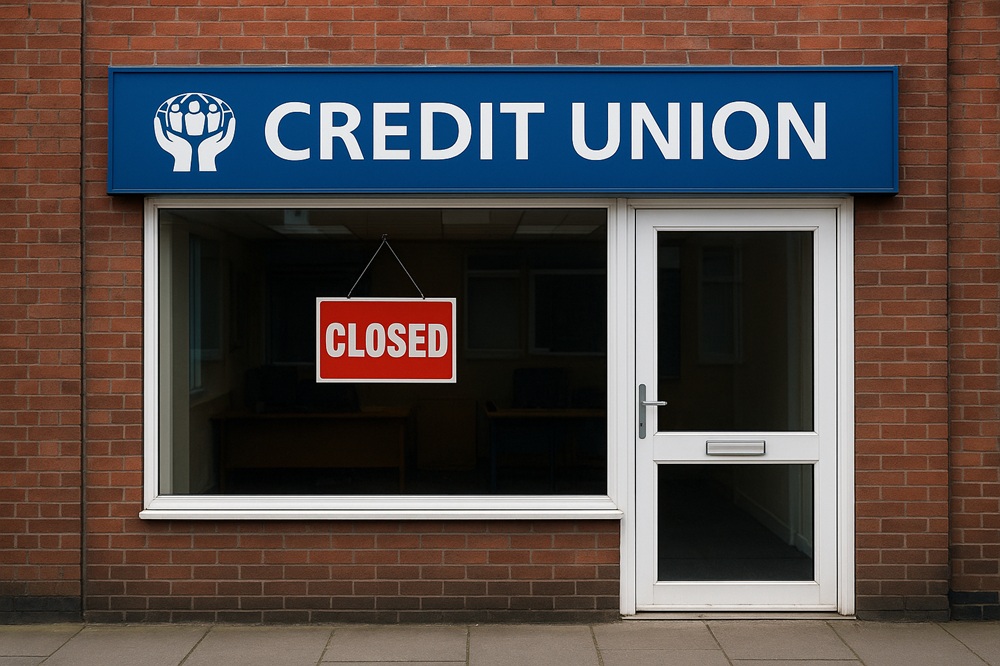
When people think about insolvency, they usually picture struggling businesses, unpaid creditors, and the Insolvency Practitioner (IP) stepping in to sort it all out. That’s the stereotype. What most people don’t realise is that credit unions can and do fail – and when they do, it’s a completely different type of insolvency from anything else.
Over the years, I’ve had experience dealing with credit union liquidation and administration, and I can tell you: they are in a class of their own. Very few IPs have handled them, and frankly, not every IP should. They require technical skill, yes, but also sensitivity, patience, and the ability to handle situations that are as much about people and community as they are about balance sheets.
In this blog, I want to explain why credit union insolvency is different, what makes it challenging, and why it matters so much who you appoint to handle the process.
The people behind the numbers
Let’s start here, because this is the single biggest difference.
When a limited company goes into insolvency, the creditors are often trade suppliers, banks, HMRC. Faceless institutions. It’s about contracts, invoices, and balance sheets.
When a credit union fails, the creditors are the members. And the members are people – often some of the most vulnerable in society.
- Some live on very low incomes, have few if any assets and are continually juggling bills in order to survive.
- Some are financially excluded, they don’t have a bank account anywhere else.
- Some are virtually English language or IT illiterate.
So when their credit union closes, it isn’t just a financial inconvenience. It can feel like the rug has been pulled from under them. For some, it’s terrifying.
That means the Insolvency Practitioner can’t just be a technician. They have to be a communicator, a patient explainer, and sometimes even a reassuring voice at the end of a phone line. Letters have to be written in plain English, sometimes repeated, and always backed by empathy. This is not about jargon or procedure, it’s about real people, and real lives.
The dual role of members
Another quirk: in a credit union, members can wear more than one hat.
- Some are savers only – they’ve built up a balance, often because they believe in the idea of credit unions as community finance.
- Some are borrowers only – they’ve taken out a loan but withdrawn their savings.
- Some are both savers and borrowers – they’re still repaying a loan but also have money in savings.
This dual status confuses people when a credit union fails. They’ll often say: ‘Well, I’ve got £500 in savings and I owe £400 on a loan – so can’t we just call it quits?
It doesn’t work like that. Savings are treated one way; loans another. That creates difficult conversations and requires absolute clarity from the IP.
What happens to savings?
This is a shock for many members.
The money in a credit union’s bank account – the pot that represents members’ savings not yet loaned out – is not their money. Legally, it belongs to the credit union itself. And once the credit union goes into insolvency, that cash becomes an asset of the estate, seized by the IP.
Members don’t get it back directly. Instead, they’re protected by the Financial Services Compensation Scheme (FSCS).
The process works like this:
- The IP submits verified membership data to the FSCS.
- FSCS checks the data.
- The FSCS pays savers directly – usually quickly (but arguably not quickly enough for some savers at a time of significant worry).
It’s a robust safety net. Members are covered up to £85,000 per person, per institution, very few people need that level of cover. But the process can still feel alien to someone who’s never dealt with a regulator, and it’s the IP’s job to make sure the data is accurate and the communication clear. Get it wrong, and vulnerable people are left waiting for money they desperately need.
What happens to loans?
Loans don’t vanish just because the credit union has failed.
If you borrowed £1,000 from your credit union, you still owe £1,000 and you’re still expected to repay it.
But here’s the snag: once the volunteers and staff are gone, who’s left to chase the payments? The records can be patchy, the systems creaking / old fashioned, and many debtors assume that when a credit union closes, their loan obligations disappear.
That’s why debtor collections can become one of the toughest parts of the process. The IP has a few options:
- Try to collect repayments directly over time.
- Outsource the collections.
- Transfer the loan book to another credit union.
But transferring isn’t straightforward either.
The problem of the loan book
Credit unions often fail because their loan books have too many bad or doubtful debts. Passing the entire book to a healthy credit union risks spreading the rot.
That’s why I always assess the strength of each and every loan and separate the good from the doubtful / bad. The good loans I can transfer to another credit union with a similar common bond, allowing members to keep repaying in a familiar structure, while the bad debts remain in the insolvent estate for me to collect, sensitively – I don’t like to outsource collections, I want complete control over the entire collection process – the buck stops here.
Crucially, the transfers to another credit union don’t happen at ‘face / book value.’ I will sel even the good loan book at a discount. That discount helps the acquiring credit union fund the management costs of collecting over the remaining loan terms. Without it, even good loans could tip the incoming credit union into trouble.
Not every IP takes that approach. Some transfer whole books without filtering. But in my view, that’s short-sighted – and risks creating a second insolvency.
How are costs funded?
Here’s another key difference from many corporate insolvencies: credit union insolvencies are usually funded from the credit union’s own cash balance.
Remember that pot of money in the bank? The one that represents savers’ deposits? Once insolvency hits, it becomes an asset of the credit union. That’s what funds the administration or liquidation process.
It’s not always a huge sum, but it’s normally enough to cover the core work: FSCS data checks, member communications, and handling the loan book.
This is a subtle point, but important – because it means that an insolvency isn’t unfunded. The money is there, but it has to be handled carefully and transparently.
The board’s role
One final peculiarity: in a credit union, the board decides who to appoint as administrator or liquidator.
That’s very different from many other insolvencies, where the secured lender has the real say.
Boards of credit unions are often made up of respected community figures – the “great and the good” of a town, a sector, or a church group. When failure comes, some disappear quickly to protect their reputations. Others stick around, nervous and scrutinising every decision.
Either way, the responsibility is theirs: they must appoint someone, and they must be confident that the person they choose has both the skills and the willingness to handle a credit union properly.
Because not every IP will.
Regulatory complexity
Credit unions are unusual legal animals. They’re dual-regulated by both the Prudential Regulation Authority (PRA) and the Financial Conduct Authority (FCA). The FSCS also looms large in any failure.
So the IP doesn’t just report to creditors. They have to liaise with regulators and compensation schemes too, often under close scrutiny from politicians and the press.
That adds a layer of compliance and complexity you don’t find in a typical SME administration.
The practical headaches
On top of everything else, credit unions tend to have:
- Outdated systems – sometimes little more than spreadsheets.
- Patchy records – loan agreements missing, membership records incomplete.
- Cash-handling issues – without staff or branches, setting up mechanisms for debtors to keep paying is hard.
- Cultural resistance – members often don’t believe they should repay loans if their savings have gone, albeit temporarily.
Every one of those creates more work for the IP – and more opportunities for things to go wrong if the wrong person is appointed.
The human side
Perhaps the most striking thing is the atmosphere.
When a manufacturing company fails, the story might hit the business pages. When a credit union fails, it’s front-page news in the local paper. Emotions run high. MPs write letters. Community leaders worry about reputations.
The IP is in the spotlight in a way that rarely happens elsewhere. Every decision is scrutinised, every action analysed. And behind it all are ordinary members – often vulnerable people – who simply want to know: will I get my money back? Do I still have to repay my loan?
That’s why handling these cases isn’t just about insolvency law. It’s about trust, reassurance, and community impact.
Why experience matters
So what does all this mean?
It means that when a credit union fails, appointing the right IP isn’t just a legal formality. It’s a critical decision. Boards have to ask:
- Does this IP understand the peculiarities of credit unions?
- Have they handled them before?
- Will they take the time to explain things in plain English?
- Do they appreciate the sensitivity of dealing with vulnerable people?
- Will they balance the books and protect the wider sector by not dumping bad loans on another credit union?
Because the wrong appointment can make a bad situation worse.
A personal reflection
After nearly 40 years in insolvency, I’ve seen just about every type of case. But credit unions stand out for one reason: the human impact.
You’re not just closing a financial institution. You’re pulling apart something that, for many people, was their lifeline, something they really believed – and still belie – in. That carries a weight of responsibility that’s hard to explain unless you’ve lived it.
Yes, you need to know the rules. Yes, you need to know how to handle the FSCS and the PRA. But above all, you need to care about the people you’re dealing with.
That’s why I say: credit union insolvency is different. It’s harder. It’s messier. And it absolutely matters who you appoint to do it.
Conclusion
Credit unions exist to serve people who are often excluded from mainstream finance. When they fail, the consequences land hardest on those who can least afford it.
That’s why their insolvency process is unlike any other. From FSCS claims to loan book transfers, from vulnerable members to community scrutiny, everything about it is different.
And that’s why boards need to think carefully before appointing an IP. The person they choose will not just be winding up a company. They’ll be managing trust, reputations, and livelihoods.
Get it right, and the process can be managed sensitively and fairly. Get it wrong, and vulnerable people suffer unnecessarily.
I’ve been privileged to handle credit union insolvencies myself. They’re not easy – but with the right approach, they can be handled with dignity, clarity, and fairness.
Because in the end, that’s what insolvency should be about.
If you’re a board member of a credit union and would appreciate a no commitment, confidentail chat, call me on 07813 102014.