
What a fictional plastics supplier can teach us about real-world risk
I have been testing the 6-Lens Review process on well-known organisations using only publicly available information, to see how effectively it helps directors and managers make better decisions under pressure.
This time, I ran a test review for the Managing Director of an invented plastics parts supplier to Jaguar Land Rover (JLR). The fictional supplier’s problem is very real in principle:
-
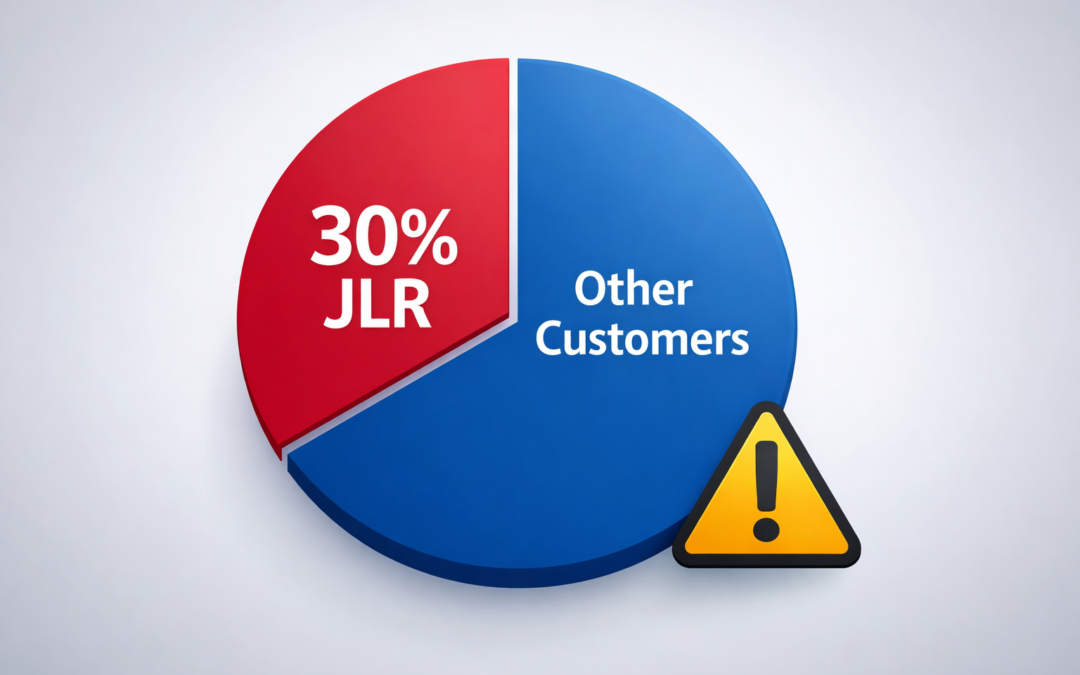
JLR has typically been 30% of their turnover
-
JLR is highly demanding in quality, reporting, and management time
-
JLR has recently reported results that show a difficult trading period, alongside well reported operational and reputational issues
-
The MD asked me for a brief, practical report: “What’s the risk, what should I look out for, and how do I protect the business?”
What follows is a short version of what the 6-Lens Review produced.
The scenario
The supplier is profitable but stretched. JLR dominates capacity planning, engineering time, quality admin, and commercial attention.
The MD’s concern is not only “Will JLR fail?” It is this:
Even if JLR survives and stabilises, could JLR still damage us through volatility, price pressure, disputes, and time drain?
That is a mature question. Many suppliers ask it too late.
What the 6-Lens Review is designed to do
The 6-Lens Review looks at a situation from six specialist viewpoints, so you do not miss the obvious or the hidden risks.
I use the lens order STINTLE:
-
Strategist
-
Turnaround
-
Innovator
-
Technician
-
Litigator
-
Empath
For this supplier scenario, the lead lenses were Strategist and Turnaround. The supplier is not trying to “diagnose” JLR. They are trying to manage exposure to a dominant customer.
Lens findings
1) Strategist lens: what is the real risk to the supplier?
The biggest risk is not always “JLR goes bust”. For a supplier, the biggest risks are usually:
-
programme instability (sudden changes in call-offs and schedules)
-
model transition risk (run-outs, delays, and uncertain launches)
-
terms and behaviour risk (payment term creep, chargebacks, deductions)
-
supplier burden transfer (more reporting, audits, compliance, unpaid support)
-
margin squeeze (price-down demands and “should cost” pressure)
When a customer is 30% of turnover, these risks become existential because they hit cash, capacity, and management bandwidth.
Strategist conclusion: treat JLR as a high-value customer, but do not treat them as your “default priority” unless the account is properly priced for the true cost-to-serve.
2) Turnaround lens: what could go wrong next, and how does it show up early?
JLR’s recent period has been affected by a combination of operational disruption and strategic transition. For a supplier, that often shows up as the following patterns:
Early warning signs that matter to suppliers:
-
Call-offs change inside lead time, repeatedly.
-
Urgent expedites increase, and you are expected to absorb the cost.
-
Higher level of deductions and debit notes, with slower dispute resolution.
-
Engineering changes arrive late, and drawings or specs do not stabilise.
-
More meetings, more reporting, more “critical” escalations, without commercial recognition.
Turnaround conclusion: you need a weekly risk dashboard and pre-agreed red lines. Without that, you will sleepwalk into being the shock absorber for someone else’s instability.
3) Innovator lens: the EV transition and what it means for plastic parts
The move toward EVs is not just a powertrain change. It often drives:
-
new designs, new materials, new validation regimes
-
more variant complexity
-
more traceability and quality evidence demands
-
higher launch pressure and tighter timelines
The risk is not “EV is bad”. The risk is launch and transition volatility, and the supplier being forced into expensive change cycles.
Innovator conclusion: demand clarity on programme governance, change control, and who pays for validation and re-PPAP activity. Do not treat repeated change as “business as usual”.
4) Technician lens: where suppliers bleed money without noticing
Suppliers rarely lose money on the invoice line. They lose it in the background:
-
excess admin and reporting
-
“free” engineering support
-
repeated audits and corrective actions
-
premium freight
-
scrap driven by late changes
-
excess stock held “just in case”
-
internal firefighting time
Technician recommendation: create a true cost-to-serve view for JLR. If the account is 30% of turnover and 60% of your headaches, your pricing and boundaries are wrong.
5) Litigator lens: disputes, claims, and how OEMs hold cash back
In difficult periods, large customers often become more aggressive with:
-
deductions for alleged quality issues
-
chargebacks for line stops, sorting, warranty, logistics
-
retrospective claims
-
tighter interpretation of specs and responsibilities
The legal issue is not one major court case. It is a slow drip of disputes that tie up cash and management time.
Litigator recommendation: formalise a deductions and disputes protocol:
-
evidence required
-
notification deadlines
-
resolution timelines
-
escalation routes
-
and clear rules on what is unacceptable
6) Empath lens: the human risk inside the supplier
If one customer dominates the business, it can quietly damage culture:
-
teams become reactive and exhausted
-
other customers get neglected
-
managers stop planning and start coping
-
resentment builds, quality can suffer, and retention becomes harder
Empath recommendation: take control of the relationship. Being “demanding” is not a reason to tolerate unreasonable behaviour. It is a reason to professionalise the account rules.
Practical output for the MD: what to do next
This was a brief report, so we focused on actions that give the biggest protection quickly.
A. Put boundaries in writing
Create a one-page Supplier Operating Protocol that covers:
-
change control process
-
what is chargeable (engineering changes, re-validation, additional reporting)
-
forecast freeze windows
-
expedite rules (if they cause the rush, they pay)
-
disputes and deductions process
B. Run a weekly exposure dashboard
Track, weekly:
-
total exposure (invoiced, shipped-not-invoiced, disputed)
-
deductions and debit notes
-
premium freight and overtime caused by JLR
-
engineering hours spent on JLR
-
stock held specifically for JLR
-
call-off volatility metrics
C. Agree red lines now, not later
Examples:
-
if disputes exceed £X or are aged beyond Y days, escalate and pause non-essential work
-
if call-offs change inside lead time more than N times per month, require written agreement on cost and delivery impacts
-
if margins fall below a minimum threshold after cost-to-serve, reprice or reduce scope
D. Reduce dependency deliberately
At 30%, the MD should set an internal target to reduce to 20% to 25% over 12 to 18 months by winning other work. That creates leverage and resilience.
This is not “walking away”. It is regaining control.
The real point of the test
This was a fictional supplier scenario, but it reflects real supplier pain.
The lesson is simple:
You can be exposed to customer risk even when the customer survives.
What matters is volatility, behaviour, terms, and your own boundaries.
The 6-Lens Review helps a director move from vague anxiety to a controlled plan, with early warning indicators, red lines, and practical protections.
If you are a supplier with one customer over 20% of turnover, and you feel your team is being drained, it is worth doing this exercise properly, based on real information, not just that publicly available. Call or email me – tel 07813 102014, email paul@midlandsbusinessrecovery.co.uk
Hashtags
#JaguarLandRover #JLR #AutomotiveSupplyChain #Manufacturing #UKManufacturing #BusinessRisk #Cashflow #Turnaround #Resilience #InsolvencyPractitioner #6LensReview #Leadership