
If you read the Insolvency Service’s press releases and monthly outcomes, one pattern is impossible to ignore.
COVID financial support scheme misconduct, especially Bounce Back Loan abuse, has become the main event.
That does not mean the focus is wrong. Taxpayer-funded schemes were abused at scale and enforcement matters. But there’s a second question worth asking, and it is the one that affects the wider business community:
Is the system now optimised to pursue the easiest-to-prove misconduct, rather than the most economically harmful misconduct?
This blog is a follow-up to our earlier piece on BBL disqualifications. Rather than repeating the same warnings, I want to look at what the enforcement trend tells us about priorities, the practicalities of investigation, and what that means for directors, suppliers, and honest businesses.
If you want to browse individual disqualification summaries yourself, the Insolvency Service database is here:
https://www.insolvencydirect.bis.gov.uk/iesdatabase/viewdirectorsummary-new.asp
1. The headline numbers do matter, but the implication matters more
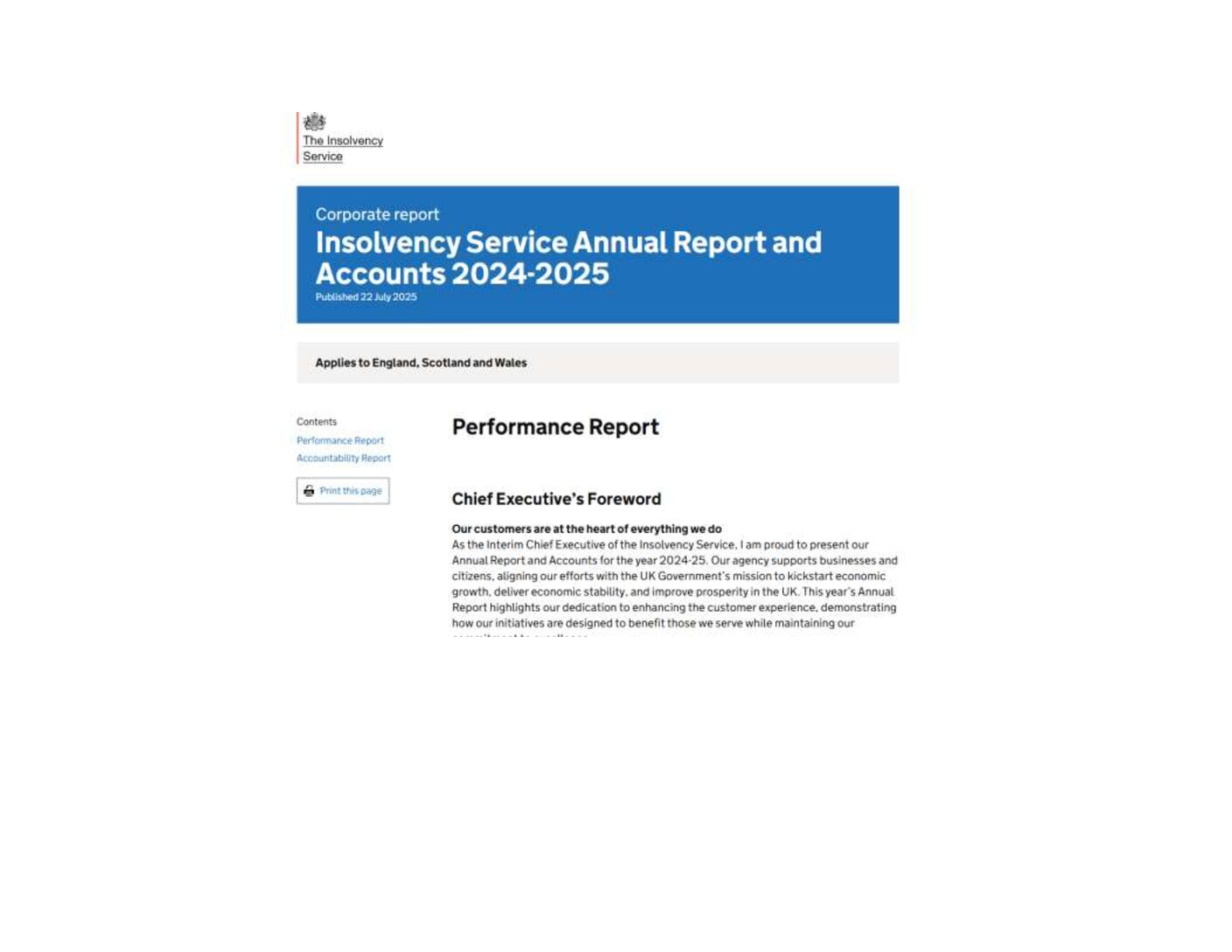
The Insolvency Service’s Annual Report and Accounts for 2024–25 states that 63% of its disqualification and criminal outcomes were related to misconduct in COVID-19 financial support schemes. (GOV.UK)
That is not a “side project”. It is the majority of their visible enforcement output.
Their Annual Plan for 2024–25 also says they expected around 60% of investigations to involve COVID support scheme misconduct. (GOV.UK)
So the enforcement system is, by design, spending a large share of attention on COVID support scheme cases.
The point I want to make is not “stop doing that”. The point is this:
When most of your pipeline is one category, everything else competes for the remaining oxygen.
2. Why COVID and BBL cases are attractive enforcement targets
If you have worked in investigations, you will recognise the pattern. BBL-related cases often have three features that make them comparatively “clean” to pursue:
A. There are clear rules and clear breaches
One loan per business. Maximum amount. Eligibility criteria. Use of funds. These are often binary questions.
B. There is a paper trail, usually bank-led
BBL applications went through banks, and money moved through bank accounts. That produces evidence.
C. There is a public interest narrative
Taxpayer money is emotive. That brings political pressure and budget support.
None of this means the director is automatically dishonest, but it does mean the case is often easier to frame, easier to evidence, and easier to win than a messy “slow burn” insolvency abuse where the harm is spread across suppliers over years.
That is the uncomfortable truth.
3. What might be losing attention as a result
This is where your instinct is valid.
There are other forms of misconduct that can be just as damaging to creditors, sometimes more damaging, and they are often harder to investigate quickly:
- Long-term creditor prejudice through poor governance and selective payments
- Asset stripping, undervalue sales, and connected party transactions
- Systematic non-payment of HMRC over multiple trading cycles
- Serial phoenix behaviour and reuse of trading names
- Consumer harm where companies trade on advance payments then collapse
These cases are often slower, more complex, and less headline-friendly. They can also be harder to quantify and harder to prosecute.
If enforcement teams are stretched, and they are telling us they are, then naturally they will prioritise cases that deliver outcomes.
The Insolvency Service also signals a broader enforcement agenda beyond COVID, including work connected to the Economic Crime and Corporate Transparency Act and building intelligence and digital investigation capability.
That is positive, but it does not remove the risk of tunnel vision.
4. What the current trend means for directors
Two practical takeaways for directors follow from this:
A. If you took COVID support, assume scrutiny is possible
Not because you did anything wrong, but because this is where the enforcement energy is. The Annual Report describes continued focus and gives figures for COVID-related prosecutions and disqualification outcomes. (GOV.UK)
So keep your evidence clean:
- What support you received, when, and from which bank or authority
- How you used it for business purposes
- Board notes explaining key decisions
- Proper accounts and tax filings
B. Do not rely on “everyone else was doing it”
Enforcement is increasingly example-led. One high-profile ban can change behaviour across a sector overnight.
There has also been substantial media attention in prominent cases, which reinforces the reputational consequences.
5. What it means for suppliers and trade creditors
If you supply businesses that may have restructured post-COVID, keep a sharper eye on basic controls:
- Who are the directors now, and what is the trading history
- Are Companies House filings up to date
- Are payment terms being pushed repeatedly
- Do you see sudden changes in behaviour around credit limits
Companies House search is the quickest first step.
Your aim is not paranoia. It’s disciplined credit control.
Takeaway checklist
For directors
- Check exactly what COVID support your company received and document it
- Keep proof of business use of funds and avoid reconstructed paperwork
- Keep board notes for key decisions once financial pressure appears
- Keep HMRC filings current and do not let arrears drift without a plan
- Take advice early if insolvency is likely
HMRC’s insolvency guidance is here:
https://www.gov.uk/topic/business-tax/insolvency (GOV.UK)
For suppliers
- Tighten credit if behaviour changes, do not wait for a default
- Monitor Companies House filings and director changes
- Get terms in writing and document all payment discussions
- If arrears build, act early and escalate calmly
Final thought
The clampdown on BBL and COVID scheme abuse is necessary. The Insolvency Service’s own published figures show it remains central to their enforcement work. (GOV.UK)
But the wider question remains legitimate: does a heavy focus on one type of misconduct reduce attention on slower, equally damaging insolvency abuse elsewhere?
If we want a healthier business environment, enforcement needs both:
- high-visibility action on obvious fraud, and
- steady, less glamorous work on the creditor harms that quietly destroy trust in trading.
That balance is worth talking about openly.
#Insolvency #BounceBackLoan #DirectorDisqualification #CorporateGovernance #HMRC #UKInsolvency