
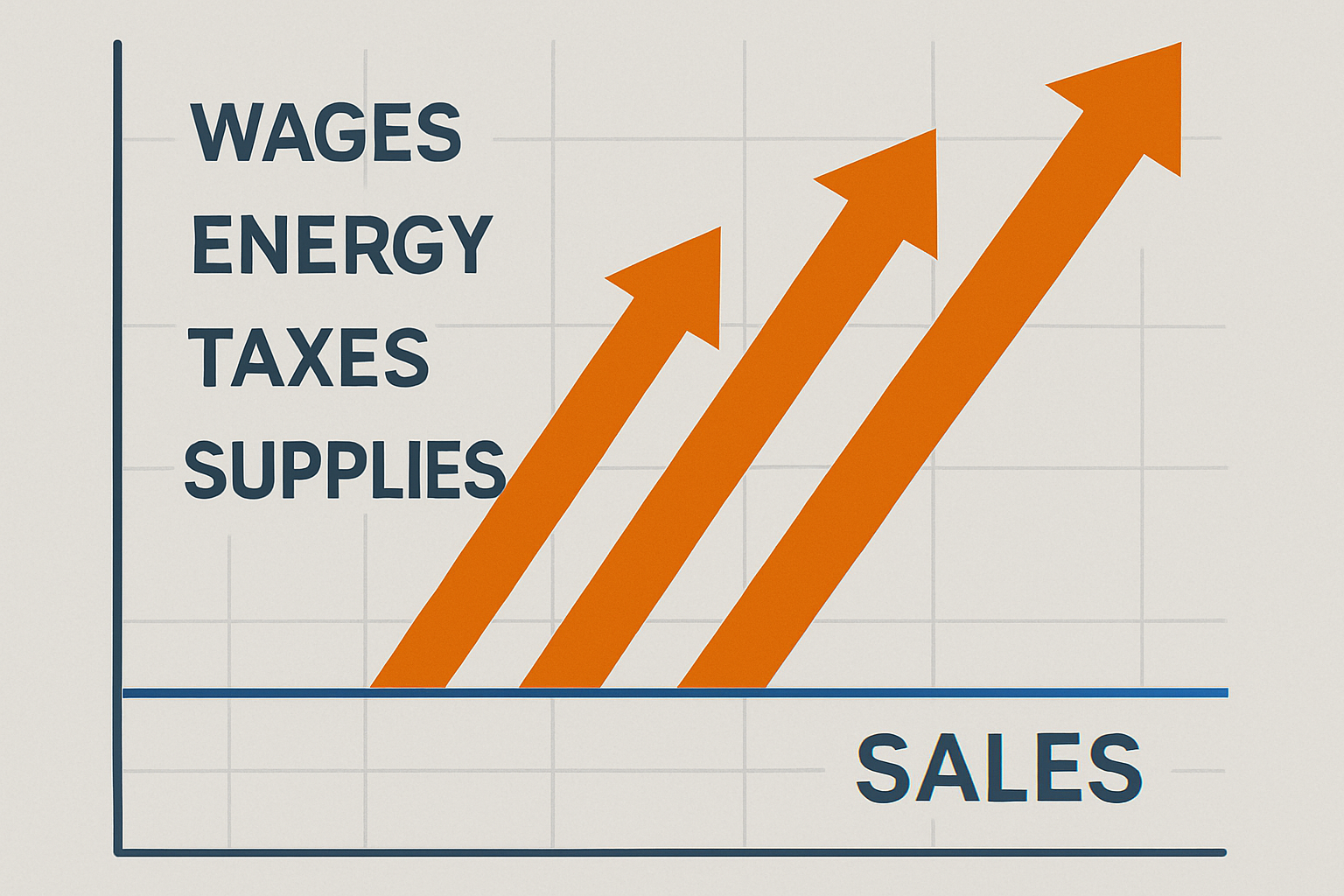
I’ve been in insolvency for 40 years, and I don’t say this lightly: trading conditions right now are as tough as I’ve ever seen.
Directors across manufacturing, retail, construction, and services are telling me the same thing: margins are squeezed, cash is thin, creditors are less patient, and support is harder to find. People are comparing this autumn not just to the 2008 financial crisis, but to the early 1990s recession, and finding today worse.
Why are conditions so severe?
-
Costs remain stubbornly high.
Inflation has cooled on paper, but in reality, wages, energy, and raw materials are still biting. -
Demand is fragile.
Consumer confidence is weak. Businesses and households alike are spending cautiously. -
Credit has tightened.
Banks are cautious, overdrafts are harder to extend, and private lenders are choosier. -
HMRC is uncompromising.
The “soft touch” of the pandemic era is long gone. HMRC is now one of the most aggressive creditors, especially for PAYE and VAT arrears.
➡️ HMRC – Time to Pay guidance. -
Formal insolvencies are rising.
CVLs and administrations are now higher than at any time in the past 30 years. The Insolvency Service data confirms it.
➡️ Insolvency Statistics – gov.uk.
What this means for directors
The old playbook of ‘hold your nerve, trade through it, the bank will back you’ no longer applies. In today’s environment:
-
Cash is king. You must know your exact cash position daily.
-
Creditors act quickly. Suppliers switch to cash-on-delivery, landlords threaten forfeiture, and HMRC issues petitions without delay.
-
Banks expect a plan. They won’t extend facilities without a clear recovery strategy.
-
Directors’ duties sharpen. Once insolvency is likely, your legal duty is to creditors, not shareholders. (Director duties in insolvency – gov.uk)
Practical steps to take right now
-
Produce a rolling 13-week cashflow forecast and update it every week.
-
Engage with HMRC early if arrears are building – apply for a Time to Pay deal before they escalate.
-
Talk to suppliers. Don’t wait until they cut you off – negotiate terms in advance.
-
Check your personal exposure (overdrawn loan accounts, guarantees). See my earlier blog: Directors’ Loan Accounts and Insolvency Risk.
-
Document decisions. Keep contemporaneous board notes so you can evidence creditor-focused thinking. Read: Contemporaneous Notes: Your Best Defence.
-
Explore funding options. Asset-based lending and invoice finance are still active – provided your records are strong.
-
Take advice early. Don’t wait for the petition to land. A confidential chat with an insolvency practitioner can reveal options you didn’t know existed.
Autumn 2025 Takeaway Checklist
✅ Daily visibility of your company’s cash position
✅ 13-week rolling forecast updated weekly
✅ Early engagement with HMRC and key suppliers
✅ Review personal guarantees and DLA exposure
✅ Document all board decisions
✅ Explore alternative funding routes
✅ Speak to a licensed IP before creditors escalate
Final Thoughts
It may be true that conditions are tougher than anything we’ve faced in 30 years, but businesses can survive with discipline, transparency, and the right advice.
The biggest mistake directors make is hoping things will improve if they wait long enough. In 2025, hope is not a strategy. Clear numbers, honest dialogue, and decisive action are.
If you’re struggling, I’m here to listen. Sometimes a short, confidential conversation is all it takes to work out your next step.
Paul Brindley FCA
Licensed Insolvency Practitioner
Midlands Business Recovery
Hashtags:
#Insolvency #Directors #BusinessRescue #Cashflow #HMRC #InsolvencyPractitioner #MidlandsBusinessRecovery