
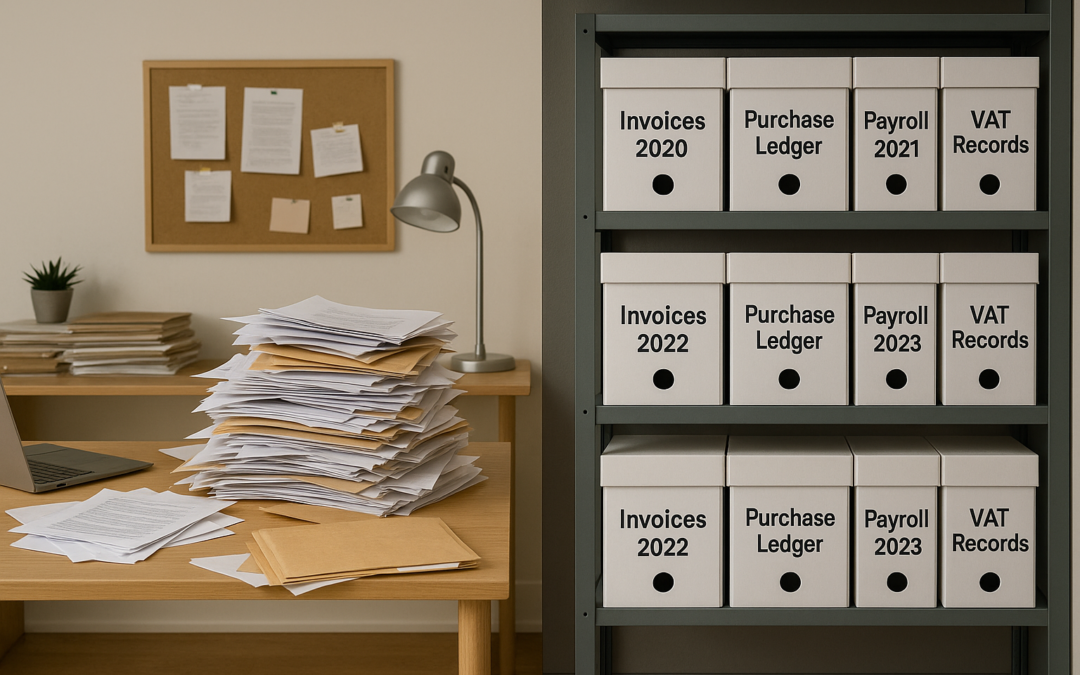
When a business is under financial pressure, directors often find themselves firefighting day‑to‑day issues. In the process, record‑keeping is one of the first things to slip – but it’s also one of the most important protections you have.
Good records are more than admin. They can:
-
demonstrate responsible behaviour,
-
reduce risk of personal liability,
-
support rescue or restructuring options, and
-
make any insolvency process smoother, faster and less costly.
In this blog, I’ll explain what records matter most, why they’re so crucial when insolvency is a possibility, and how directors can quickly tighten up systems even during difficult trading.
Why Record‑Keeping Matters So Much in Insolvency
When a company enters financial distress, the actions of directors come under scrutiny. Insolvency practitioners, creditors, regulators (including the Insolvency Service), and sometimes the courts may review conduct.
Clear, accurate records help show:
✔ You acted responsibly and informedly
You can demonstrate that decisions were based on up‑to‑date financial information.
✔ You considered creditors’ interests
This is vital once the company is insolvent or likely to become insolvent.
✔ No preferential or improper transactions took place
Records help protect directors from allegations of preferences, undervalue transactions, or misfeasance.
✔ The company complied with Companies House and HMRC obligations
Failing to keep correct statutory records is itself a breach of the Companies Act and can lead to penalties.
Useful links:
-
Companies House record-keeping rules: https://www.gov.uk/running-a-limited-company/company-and-accounting-records
-
HMRC guidance: https://www.gov.uk/government/organisations/hm-revenue-customs
-
Insolvency Service: https://www.gov.uk/government/organisations/insolvency-service
-
Case law via BAILII: https://www.bailii.org
What Records Directors Must Maintain (Especially When Insolvency Looms)
The essentials include:
1. Financial Records
These are the cornerstone of director protection:
-
Management accounts
-
A 13‑week cash‑flow forecast
-
Aged creditor and debtor summaries
-
Bank reconciliations
-
Stock records
-
Asset register
-
Details of loans, leases, HP agreements and personal guarantees
Even if your internal systems are behind, bringing them up to date should be a priority.
2. Board Minutes & Decision Logs
When insolvency is a risk, minutes become crucial evidence of responsible governance. They should show:
-
The financial information considered
-
Options reviewed (including restructuring and insolvency processes)
-
How creditor interests were considered
-
Advice received (legal, accounting, insolvency)
-
Who attended and what was agreed
These minutes later help demonstrate that directors acted reasonably – a key defence against wrongful trading claims.
3. Transactions & Payments Records
You must keep clear evidence of:
-
all payments to creditors
-
any payments to directors or connected parties
-
asset disposals (including valuations)
-
loan repayments or changes
-
any capital introduced by directors
This helps prevent allegations of preferences or transactions at undervalue.
4. Tax Records & HMRC Correspondence
HMRC expects timely, accurate filings even in distress. Make sure you retain:
-
VAT returns
-
PAYE records
-
Corporation tax filings
-
Time to Pay communications
-
Arrears statements
Useful information:
https://www.gov.uk/guidance/time-to-pay-arrangements
5. Employee Records
These become critical if redundancies or TUPE issues arise. Keep:
-
Employment contracts
-
Payroll records
-
Consultation notes
-
Holiday and redundancy calculations
How to Tighten Up Records Quickly
Even if things are currently messy, you can make rapid improvements:
✔ Bring financial information up to date immediately
If internal systems are poor, ask your accountant for urgent assistance.
✔ Set a schedule for board meetings (weekly during distress)
Consistency matters.
✔ Introduce a simple ‘decision log’
Every key decision, however small, should be written down with reasons.
✔ Keep physical and digital files organised
Create folders for:
-
finance
-
creditors
-
payroll
-
tax
-
assets
-
board minutes
-
legal/advice received
✔ Maintain a clear audit trail
If something changes, record why.
✔ Store everything securely
Cloud storage with version history (e.g., OneDrive, Google Workspace) works well.
The Link Between Record-Keeping & Personal Liability
Directors often don’t realise how closely the two are connected.
Poor records can lead to:
-
difficulty proving decisions were reasonable
-
inability to defend against wrongful trading claims
-
suspicion of preferences or undervalue transactions
-
increased scrutiny from the Insolvency Service
Meanwhile, strong, consistent records often mean:
-
faster resolution
-
fewer queries
-
lower risk of investigation
-
reduced personal exposure
This is why professional advisers place such emphasis on documentation – it’s one of the strongest shields directors have.
Takeaway Checklist
Here is your practical summary:
-
Are management accounts up to date?
-
Do you have a current 13‑week cash‑flow forecast?
-
Are creditor and debtor listings accurate?
-
Are board meetings held regularly and properly minuted?
-
Is all advice from accountants/lawyers/IPs documented?
-
Are payments to directors/connected parties clearly recorded?
-
Are tax filings and HMRC communications fully up to date?
-
Is there an organised asset register?
-
Are employee records complete and accessible?
-
Is there a clear, simple decision log for all key actions?
If you can tick most of these, you’re doing better than many companies in distress – and protecting yourself in the process.
Final Thoughts
Record‑keeping may not feel glamorous, but it’s one of the most powerful tools directors have when navigating financial distress. Good records tell the story:
we were informed, we were responsible, and we acted in creditors’ best interests.