
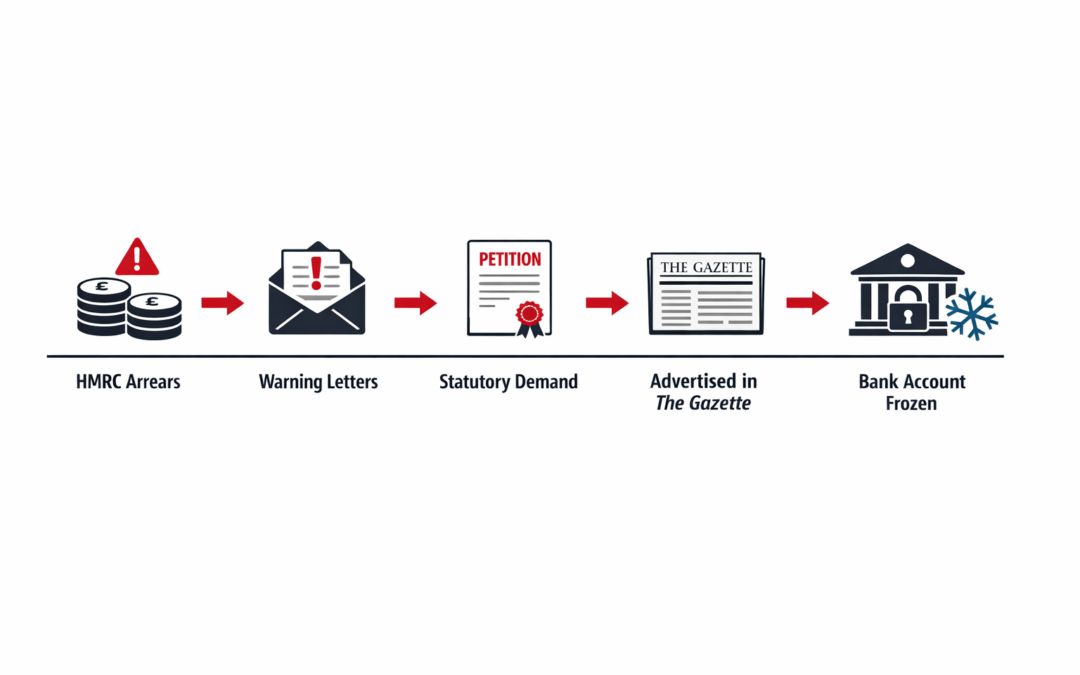
When HMRC (or another major creditor) decides it has had enough, the escalation to compulsory liquidation can feel brutally quick. In reality, it is usually a process with recognisable stages, and the most important thing to understand is this:
The danger point is often not the court hearing. It is the period around the winding-up petition – especially advertisement in The Gazette.
Below is a practical timeline of how matters typically unfold, why timing is everything, and what directors should be thinking at each stage.
1) The pre‑petition phase: arrears, pressure, and a short-deadline warning letter
Before HMRC presents a winding-up petition, there is commonly a period of debt collection activity. This can include demands, threatened enforcement and (sometimes) attempts to agree a Time to Pay (TTP) arrangement.
The “7 day letter”
A key moment in many cases is the arrival of a short-deadline warning letter (often referred to as a “7 day letter” because it typically gives only a brief period – sometimes around seven days – to pay or make acceptable proposals).
This letter matters because it is frequently the last clear warning before petition action.
Practical tip: the letter will often include contact details and a reference. Use those details. Don’t waste valuable time calling generic lines and hoping your message lands with the right team. If the letter offers a direct route in, take it – quickly, calmly, and with evidence.
What HMRC usually wants to see in response
If you are going to engage with HMRC at this stage, it needs to be credible:
- confirmation of which liabilities are accepted and which (if any) are genuinely disputed;
- an evidence-backed proposal (cashflow, affordability, and, crucially, how you will pay future taxes on time );
- up-to-date filings/returns (HMRC commonly expects compliance before it will entertain arrangements).
Director focus at this stage: as insolvency becomes likely, directors should take particular care to consider creditors’ interests and keep the company’s solvency under close review. This is the point to get advice early, document decisions, and avoid actions that worsen creditor losses.
2) The petition is presented: “Day 0” of a higher-risk legal period
If HMRC is not satisfied, it may present a winding-up petition at court. The court will issue it and list a hearing date, often several weeks ahead.
Here is the first major timing point:
The company may not know immediately
There can be a period after the petition is presented where the company has not yet been formally served. Directors may genuinely be unaware.
But advisers (and others) might find out first
This is the “information gap” that surprises many directors: while the company hasn’t been served, some advisers and credit monitoring services may become aware of petition activity through publicly available listings/data feeds and market intelligence. In other words, formal notice comes with service, but in the real world, petition information can surface earlier.
3) Service of the petition: formal notice reaches the company
The petition must be served on the company (often at the registered office). This is the point at which the board should assume that everything is now running to a tight timetable.
What should happen immediately after service?
- urgent professional advice (solicitor/licensed insolvency practitioner – me!);
- a clear decision on strategy: pay/settle, restructure, dispute (if genuinely), or prepare for formal insolvency;
- tight control of cash and careful documentation of decisions.
4) The pre‑advertisement window: often the last realistic chance to prevent collapse
This period, ie after service but before advertisement, can be the company’s best opportunity to stabilise the situation.
Potential routes include:
- settlement of the petition debt (being mindful that other creditors may still support the petition);
- a realistic, evidenced deal with HMRC (not easy, but sometimes possible);
- moving into a formal rescue tool (e.g. administration ) if that is appropriate;
- if the debt is genuinely disputed on substantial grounds, urgent legal steps to restrain advertisement (highly specialist and time-sensitive).
Why this stage is so important: because once the petition is advertised, the wider market becomes aware, and that can trigger rapid operational failure.
5) Gazette advertisement: the moment everything changes
Advertisement in The Gazette is pivotal. It is the stage where the petition becomes widely visible and is often picked up automatically by banks, suppliers and credit insurers.
The real-world consequences can be rapid
Bank facilities and bank accounts:
Banks will freeze accounts once they become aware of an advertised petition.
Suppliers and customers:
Supply may be stopped, credit terms withdrawn, customer confidence shaken, and key contracts jeopardised.
Other creditors may join in:
Once the petition is public, other creditors may decide to support it, making the situation harder to reverse even if you pay HMRC.
Director focus at this stage: the risk profile changes dramatically. Trading on without a clear plan can increase exposure, particularly if losses to creditors deepen.
6) The legal reason banks panic: “void dispositions” and the petition date risk
There is a key legal concept behind the bank reaction.
If a winding-up order is ultimately made, the winding up is treated as having commenced from the date the petition was presented. This is why payments made after petition presentation can later be challenged.
The relevant provision is Insolvency Act 1986, section 127 (dispositions of property after commencement of winding up are void unless the court orders otherwise).
In some cases, advisers may consider whether a validation order is appropriate to allow essential trading payments to continue – but that is a specialist application requiring evidence and urgency.
7) The hearing: winding-up order, adjournment, or dismissal
At the hearing, the court can:
- make a winding-up order (compulsory liquidation);
- adjourn (often with conditions);
- dismiss the petition (less common unless the debt is paid, genuinely disputed, or procedurally defective).
If a winding-up order is made, the Official Receiver becomes liquidator by default (see Insolvency Act 1986, s.136(2)), with the case then following the compulsory liquidation process.
Here is a simple version of the above timeline
- HMRC arrears escalate
- Short-deadline warning letter (often called a “7 day letter” )
- Petition presented (company may not yet know; others sometimes may)
- Petition served (formal notice)
- Pre‑advertisement window (best chance to act)
- Gazette advertisement (banking/supplier shock)
- Hearing (winding-up order / adjourn / dismissal)
Final thought: act before advertisement, and document every decision
If you take only one point from this: the period before Gazette advertisement is often where outcomes are decided. Once the petition is public, the damage can become self-fulfilling, especially through banking restrictions and supply chain reactions.
If you are facing a short-deadline warning letter, have been served with a petition, or suspect one has been presented, take advice immediately and treat timing as critical – call me on 07813102014, or email me at paul@midlandsbusinessrecovery.co.uk.
#HMRC #WindingUpPetition #CompulsoryLiquidation #CompanyInsolvency #InsolvencyAdvice #DirectorsDuties #CashflowCrisis #TimeToPay #BusinessRescue #Administration #CreditorAction #TheGazette #ValidationOrder #InsolvencyAct1986 #UKBusiness #dudleyinsolvency