
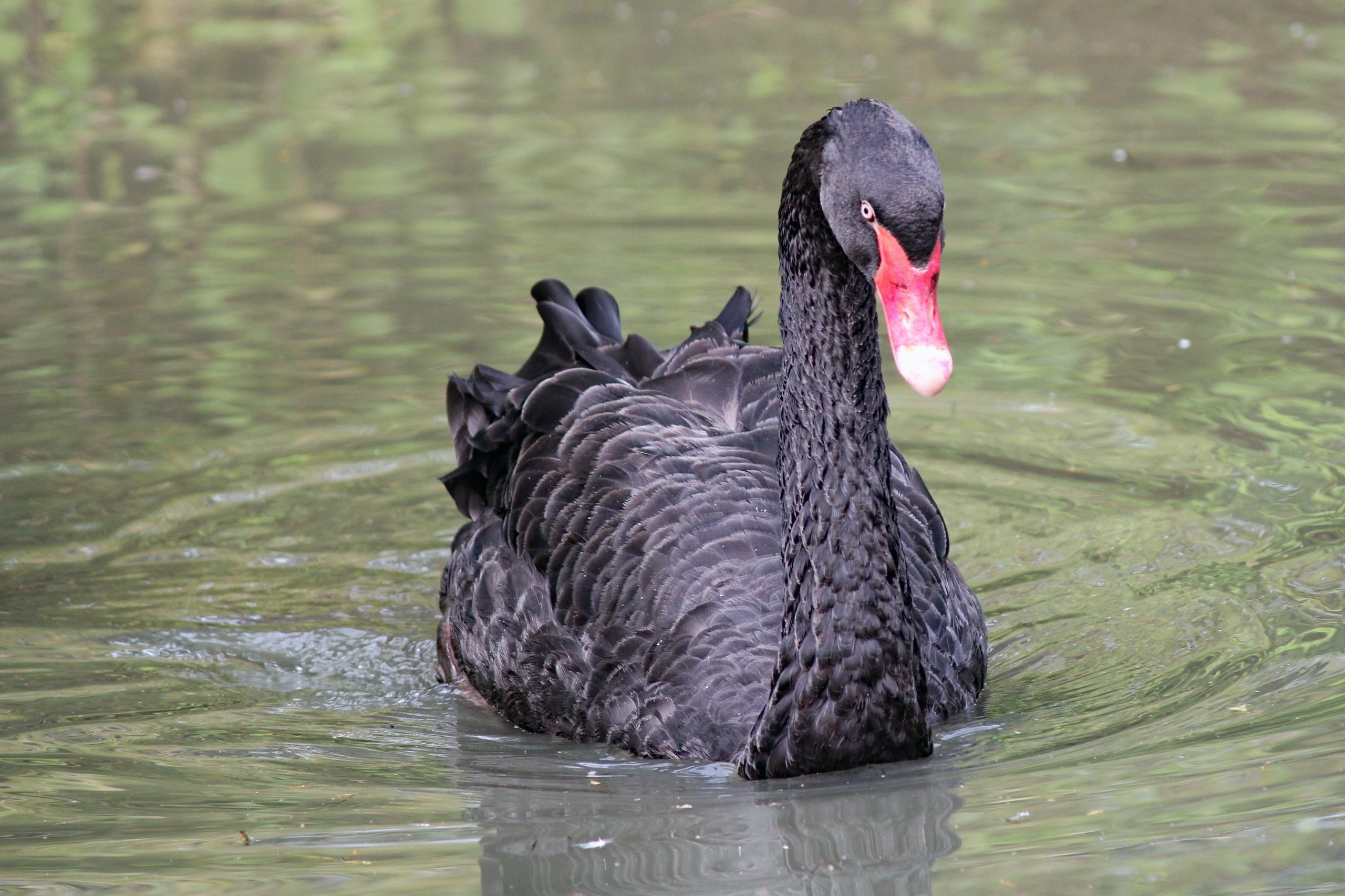
Right now, we are going through a crisis of truly epic proportions. And I’ve been thinking about what I’ll be doing, and what I will be advising clients, when we eventually get out of it.
Have you ever heard of a guy called Nassim Nicholas Taleb? He’s quite a famous fellow, he’s even got his Wikipedia page. Click here to go to it. His book ‘The Black Swan’ has been described as one of the most influential books since World War 2.
His book talks about ‘Black Swan Events’, which he defines as those that:
- Weren’t predictable beforehand;
- Have a massive impact; and
- After the event we try to retrospectively explain them almost as if we could or should have foreseen them.
Taleb explains that Black Swan Events have a far bigger and longer impact than any number of day to day events, whether in our business or personal lives.
He gives examples of such events, like meeting your partner; fresh career opportunities; mid life relationship break ups; new business partnerships; business and personal treachery; the emergence of religions, new technologies and global organisations like Google; and political events such as 9/11 and the First World War… the list goes on…
The point Taleb makes is that it is unexpected Black Swan events like these that push us all into major new, long term directions, the day to day stuff doesn’t.
These events can be catastrophic – like the COVID-19 crisis – but we can, like Taleb’s Fund which made a lot of money a while ago out of such event, reap great rewards – as the Lottery says ‘you must be in it to win it’. Some Black Swan Events happen entirely by chance: some happen to us because by design, or not, we’ve exposed ourselves to them. None we have any real control over – they can turn out to be good or bad, in fact some we expect to turn out good but turn out bad, and vice versa – we just have to go with what’s given us. Right now some people are making an awful lot of money out of COVID-19, others none, sometimes there isn’t a lot of middle ground.
So where do turkeys come into this?
Well, imagine you’re a turkey… you hatch and are almost immediately put into a safe, warm and dry environment, you’re fed and watered regularly by a friendly human , and over time you get to rather like where you are. The more days that pass, the more comfort you get that your human carer will be there every morning to feed and water you, your health concerns will always be dealt with, you’ll remain safe from predators, you’ll stay warm and dry.
This goes on for several months. With every day that passes, your confidence level grows, such that after nearly one hundred, you’ve grown very used to being cared for. Then suddenly on the morning of day 100, your human carer instead of bringing you food and water, takes you out and slaughters you! Without any notice, you suffer a major reversal, a massive catastrophic event. Up to then, the more time that passed, the more comfortable you had become, you ‘knew’ what was going to happen the next day The point is, without knowing it, the risk of something massively bad happening was actually getting higher even though you thought the risk was getting lower. Put another way, you misunderstood the level of risk. But your human carer didn’t, he knew the risk for you was growing…it was a matter of whose viewpoint was right – you the turkey turned out to be the sucker, the carer the man in the know.
Many of us see most of our life working around the mean on a bell curve – remember those at school? – we don’t cater for the low probability yet high impact event. Who saw this crisis coming? If we didn’t see this one, will we see the next, unrelated crisis, whatever and whenever that may be? Once we are over this crisis, can we learn from the turkey?
This brings me onto snooker balls. Every generation considers themselves to be far smarter, far more in control of the world around them than their forefathers. We’re suckered into thinking this we’re not stupid enough to make the same mistakes, we and our systems are a lot cleverer…
A book that I read some time ago – ‘This Time is Different’ by Reinhart and Rogoff – charts 8 centuries of financial folly – it suggests that underneath it all, things don’t really change, the plot is the same, it’s just the characters and locations that are different. In some ways nowadays I personally think we need to worry a lot more – because the world is far more complicated a place and interconnected than it’s ever been – and those connections are not always obvious so the trigger for and the outcome of an event, or series of events, are far more uncertain.
Taleb touches on this in his book too. Think about it like this – you set up a snooker table with all the balls on marked spots at the other end of the table from the D. Now take the cue, and with some force hit it at a ball. Video it and take a photo of the final position when they come to a stop.
Now try to replicate it.
No matter how many times you try, you won’t do it, not even if you’re a professional snooker player.
Now imagine each of those balls is a country, each with several smaller balls around it representing what that country is about, and around them even smaller balls, and around them even smaller – for example representing its economy, the major industries in it, and the major players in each industry; another major ball its government, another its financial sector, etc.
Each time you try and replicate the first strike the journey and eventual outcome will be different because the interconnections will play out differently – and that’s even if you have the same trigger.
So how do people deal with this?
Well, we ignore it, largely. It’s too complicated for us to envisage, so instead we study the news using several sources; we meet like minded people within industry groups or networking events: we sit with our accountants and plan for what we expect to happen based on the past: we like to think that information, knowledge, our skills and systems, the people we surround ourselves with, and moving with the herd will give us the forethought, control and safety we desire. Like the turkey, we gain a great deal of false comfort – we focus on the day to day minutiae, we ignore the potential for the big unexpected event even though that might extinguish all the gains we’ve ever made, we gain comfort from sitting fairly and squarely in the middle of the herd. Taleb even goes as far as saying that people in suits, in whom we all place our trust, are in today’s world in no better a position to assess risk than a taxi driver with no skills – he argues that we’re better sitting back from afar and thinking more.
The problem is while the past and present might be an indicator of what might happen in the future, it might not be. At best the future is nowhere near as certain as we’d like to think – you might have heard me say ‘where the hell did that come from?’ in response to an unexpected event. In fact if the future does happen according to or near to plan, it’s only for a period of time, and sooner or later it is likely to either massively reverse or accelerate, turning all the plans to dust.
What Taleb is saying is it’s very dangerous for people to gain comfort from the bell curve we’ve had drummed into us applies in many aspects of our lives and there are major weaknesses in the techniques risk managers, accountants, bankers, indeed many businesses use because they ignore the potential for far more devastating – or indeed far more beneficial – Black Swan events.
Here’s another point. Adverse Black Swans like COVID-19 – those which can hurt you – can happen very quickly indeed, even instantaneously – this might be say because of the herd mentality ingrained in our society – there just had to be a trigger, almost any trigger would do. However, beneficial Black Swans tend to happen over a longer period of time, almost unnoticeably, from a slow build-up of a series of events.
Ok, here are a few things to think about (but only once you’ve got through this crisis – and if you need help managing a cash crisis, read my blog, click here)… It’s probably best done with a good bottle of red wine and in a quiet room:
- Why don’t you compile a list of where you might, on reflection, potentially be a turkey sitting at day 20, 45, 80, or even 99 days?
- Ask yourself where else within your business you might unwittingly be relying on bell curve risk management or forecasting methodologies? – think about taking a close look at your sales, production, staffing, accounting, cash and risk management.
- Now put your lists in order of the potential adverse impact on you and your business, then prioritise the ones you can do something about in the short term that might have a big impact in the future, ask yourself what you need to do to gain some real comfort. Do you need to reallocate some of your resources?
- Ask yourself, are you rolling the dice often enough and in the right places to take advantage of a potentially massively beneficial Black Swan event? What ‘free’ resources do you have to allocate to this? Should you be allocating more?
Thanks for reading
Paul Brindley
26 April 2020