
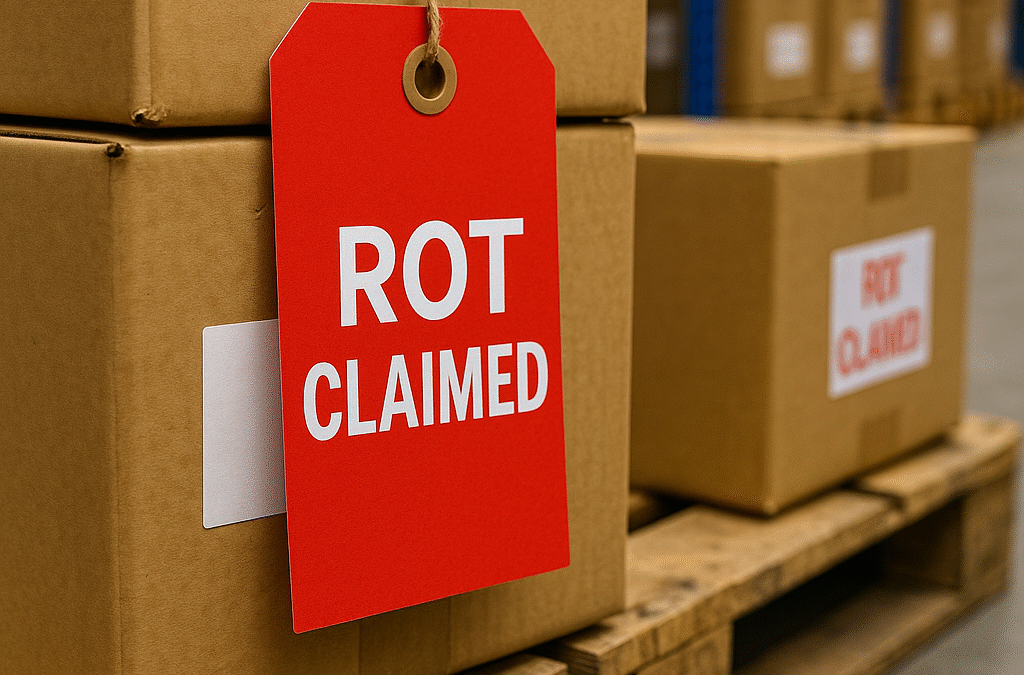
When a company you supply goes into insolvent liquidation or administration, it’s natural to ask: can I get my goods back?
If you have a reservation of title (ROT) clause in your terms and conditions, you might be able to recover goods you’ve supplied but haven’t been paid for. But the rules are complex, and success depends on timing, paperwork and the condition of the goods.
This blog explains:
-
What ROT is
-
The different types of ROT clause
-
What you must prove for a valid claim
-
How insolvency practitioners (IPs) and administrators handle ROT
-
Problems you may face
-
Steps you can take now and in future to protect your position
🔒 What Is a Reservation of Title Clause?
A reservation of title clause (also called a “retention of title” clause) is a contractual provision that says you, the supplier, retain legal ownership of goods until the buyer has paid for them.
In effect, even though the buyer has physical possession, the goods legally remain yours until the conditions in your ROT clause are met.
🧾 Types of ROT Clause: Not All Are Equal
There are several variations of ROT clause. The type you use affects how easy it is to enforce your rights in insolvency:
1. Simple ROT Clause (Specific Invoice)
This covers individual goods supplied under a specific contract or invoice. It says that ownership of those goods remains with you until they’re paid for.
This is probably the most commonly used ROT clause and generally the easiest to enforce, that is if the goods are clearly identifiable and haven’t been changed or sold.
2. All Monies Clause
This clause states that all goods supplied remain your property until all outstanding debts owed by the buyer have been paid.
Why it’s useful:
-
Helps where you supply unbranded, indistinguishable goods.
-
Avoids the need to link each item to a specific invoice.
-
More practical if you operate a running trade account.
This sort of clause is vital for certain supplies.
3. Proceeds and Tracing Clauses
Some suppliers try to claim rights over:
-
Proceeds of resale by the customer; or
-
New products made from your goods (e.g. mixed chemicals or fabricated steel).
These clauses are rarely upheld unless very carefully drafted. Courts may treat them as unregistered charges, making them unenforceable. This is known as “tracing”, and success is rare.
✅ Proving a Valid ROT Claim: What You Must Show
Having a clause in your contract isn’t enough. You must prove:
1. Incorporation into the Contract
Your ROT clause must be part of the agreed terms at the time of each sale. This usually means:
-
It appears on quotations, order acknowledgements, delivery notes or invoices.
-
Your customer accepted your terms, ideally in writing.
-
It wasn’t introduced after the goods were delivered.
2. Goods Are Identifiable
Can you prove the goods on site are yours?
-
Are they labelled or separated?
-
Do serial numbers or stock codes match your delivery records?
-
If they’ve been altered, welded, cut, assembled or repackaged, your claim will probably fail.
3. Goods Are Not Sold or Mixed
-
If the company has sold the goods on, title has passed (unless you have an enforceable proceeds clause).
-
If goods are comingled with others’ or incorporated into other products, recovery is usually not possible.
🧑⚖️ How Insolvency Practitioners and Administrators Handle ROT Claims
Insolvency practitioners (whether liquidators or administrators) have a duty to investigate any ROT claims thoroughly. Here’s how the process usually unfolds:
Step-by-Step:
-
Initial Letter to Creditors
The IP invites ROT claimants to come forward in their first circular. -
Contact from Supplier
You should act immediately, write, email or call to assert your ROT clause. -
Site Attendance
You may be invited to attend the site to identify goods. Bring invoices, terms and delivery records and photos if possible. -
Request for Supporting Evidence
The IP will usually ask you to provide:-
Your terms and conditions
-
Proof of incorporation of terms
-
Invoices and delivery notes
-
Evidence of unpaid status (a statement)
-
A schedule matching supplied goods to what’s on site
-
-
Review and Legal Advice
The IP may seek legal advice if your claim is complex or contested. Alternatively, the IP may form their own view as to your claim’s validity (IPs meet such claims regularly) -
Decision
The IP will confirm in writing / by email whether your claim is accepted or rejected. -
Collection or Return
If your claim is accepted, you’ll be expected to collect the goods prompty. This will be at your own cost.
⚖️ Administrators and the Right to Use ROT Goods
Can administrators use your goods without permission?
Surprisingly, yes, in certain cases.
Under Schedule B1, Paragraph 72 of the Insolvency Act 1986, an administrator may use or dispose of goods subject to a ROT clause if it helps achieve the purpose of administration, provided they:
-
Account to you for the value of those goods, or
-
Reach a negotiated settlement
This usually applies in trading administrations where goods are essential to keep the business running or complete a sale.
So, if you supply key inputs (e.g. raw materials or stock), your goods might be used even if you have a valid ROT claim… But you are entitled to compensation.
🧾 VAT, Credit Notes and Bad Debt Relief
If your ROT claim is accepted and you recover your goods:
-
You must issue a credit note to reflect that no sale occurred in respect of the items collected.
-
This adjusts your VAT position and prevents a double claim.
If you don’t recover the goods but don’t get paid, you may be eligible to claim bad debt relief for VAT purposes – check with your accountant or VAT adviser.
⚠️ Common Problems with ROT Claims
-
Goods unlabelled or mixed with others’
-
Goods altered (cut, fabricated, processed)
-
Sold on by the customer before insolvency
-
Delay. The longer you wait, the more likely your goods will be moved, sold, or used
-
Costs of recovery can outweigh the value of the goods
📋 Supplier Action Checklist
If a customer enters liquidation or administration:
✅ Check your terms and conditions for a ROT clause
✅ Gather all relevant documents (contracts, invoices, delivery notes)
✅ Contact the IP immediately
✅ Request a site visit to identify goods
✅ Follow up with written evidence
✅ Be prepared to pay for recovery and transport
✅ Issue credit notes for any recovered goods
✅ Speak to your accountant about VAT adjustments or bad debt relief
🛡️ Protecting Yourself for the Future
To maximise the effectiveness of your ROT clause in future contracts:
-
Include your ROT clause on every order and invoice
-
Ensure it’s clearly stated on delivery notes and acknowledgements
-
Keep a signed copy of accepted terms
-
Use labels, barcodes or serial numbers where possible
-
Maintain a stock system that links goods to invoices
-
Review your ROT clause wording with a solicitor to ensure it’s enforceable
🗣️ Final Thoughts
ROT clauses can be a lifeline for suppliers, but they’re only as good as your paperwork, processes and timing.
Insolvency doesn’t have to mean a total loss, but you need to act quickly, be organised, and understand your rights.
At Midlands Business Recovery, we’ve seen many valid ROT claims succeed, but also many fail due to avoidable issues. If you’re affected by a customer’s insolvency, we’re happy to talk you through your options.
Need help with a ROT claim or future-proofing your terms?
📞 Call Paul Brindley FCA on 07813 102014
📧 Email: paul@midlandsbusinessrecovery.co.uk